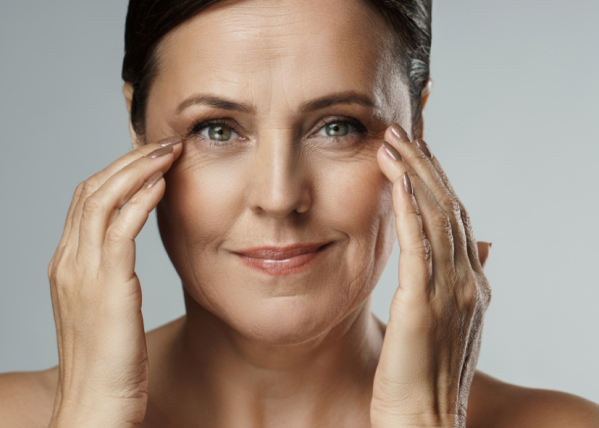
Wrinkles are usually sun and age related. Wrinkles also come in many different guises.
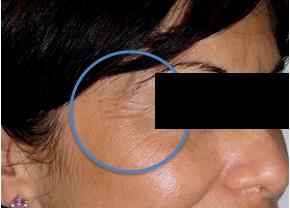
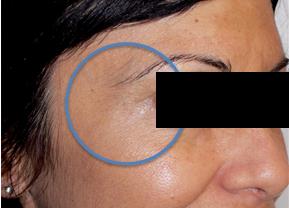
Finer wrinkles are usually most prominent in the area of the eyes (as ‘crows feet’) or around the mouth. Moderate wrinkling is often found across the forehead, between the eyebrows, or in ‘laughter lines’ on the cheeks. These wrinkle-prone areas can develop furrows if exposed to harsh sunlight.
Fillers correct established facial lines and add volume to the treated areas (such as the cheeks or lips) while anti-wrinkle product relaxes the facial muscles that produce expression lines. In general, anti-wrinkle injections are best started before established lines (wrinkles, creases or furrows). On the other hand, fillers are only useful after the onset of established lines, except for shaping procedures – such as lip shaping – that can be carried out at any stage of adult life. Fillers are often used in conjunction with anti-wrinkle product, as their actions are synergistic. Most patients start with muscle relaxing anti-wrinkle injections (those 30 years and over) to reduce excessive expression lines that can lead to permanent wrinkles. For people aged 40 years and over, permanent lines and volume loss may have occurred, and these can be improved with fillers.
How do Anti-Wrinkle Injections work?
Anti-wrinkle injections work by relaxing the muscles that, when contracted, cause wrinkles and lines to appear. When injected, the nerve impulse that stimulates muscle contraction is blocked, so lines no longer appear. Sweating can be reduced in a similar way – injecting the affected area effectively blocks the nerve impulse that stimulates sweat glands.
What conditions can benefit from Anti-Wrinkle Injections?
Facial expression lines & wrinkles
Non-surgical brow lift
Necklines
Jaw-line reshaping
Excessive sweating (especially palms & armpits)
Tension headaches
Teeth grinding
How do Hyaluronan Fillers work?
The procedure involves multiple fine injections to the treatment area. Anaesthetic may be required depending on the region. Around the lips where it’s sensitive, a cream anaesthetic applied 15–30 minutes beforehand may be helpful. Many patients find the application of ice alone sufficiently numbing to reduce the injection discomfort to a manageable level. At the completion of the treatment, the doctor or nurse may need to massage the treated area to help mould the filler into place.
What can Hyaluronan fillers do for me?
Lip shaping
Lip definition
Lip plumping
Elevate down-turning of mouth corners
Lines & furrows
Nasolabial furrows (side of nose to corner of mouth)
Marionette lines (corner of mouth to jaw)
Vertical frown lines between the eyebrows
Horizontal worry lines on forehead
Crows feet
Other shaping procedures
Cheek bones
Jaw Line
Contour correction of defects (acne, trauma, surgical)